
● 16th Edition · Registrations for 2027 now open
International Postgraduate University Diploma of Regional Anaesthesia Analgesia
The International Postgraduate University Diploma of Regional Anaesthesia Analgesia is a 1-year postgraduate qualification awarded by the University of Montpellier under the authority of the Republic of France. Delivered at VinMec Times City International Hospital in Hanoi, Vietnam, the programme comprises 80+ expert-led lectures, 40+ hands-on workshops on live models, and a clinical observership. It is open to M.D. holders and medical residents in anaesthesia, critical care, and related specialties.

AWARDED BY THE UNIVERSITY OF MONTPELLIER UNDER THE AUTHORITY OF THE REPUBLIC OF FRANCE
DURATION
1 Year
3 in-person sessions
FORMAT
In-Person
Hanoi, Vietnam
3 SESSIONS
11-14 Jan, 22-25 Mar, 3-6 May
Exam: 19 June · Ceremony: Jan
CREDENTIALS
University Diploma
University of Montpellier
This programme develops structured competency in regional anaesthesia and analgesia through three intensive in-person sessions in Hanoi. You will build advanced skills in ultrasound-guided nerve blocks, fascial plane techniques, and neuraxial anaesthesia through expert-led lectures, supervised hands-on workshops on live models, and a clinical observership at VinMec International Hospital.
This diploma is awarded by the University of Montpellier under the authority of the Republic of France, and delivered in partnership with VinMec International Hospital in Hanoi and VinUniversity College of Health Sciences in Hanoi, Vietnam.
Programme overview:
Regional Anaesthesia and Analgesia Diploma
16th
1,300+
29
20+
COUNTRIES REPRESENTED
International participant cohorts
INTERNATIONAL FACULTY
Senior clinicians and published academics
CLINICIANS GRADUATED
Across all MEDINFUSION diplomas
EDITION
Delivered annually since 2010
What our graduates say
An exceptionally well-designed course with hands-on training and excellent ultrasound-guided skills. The faculty prepared candidates to excel as regional anaesthesia heroes.
Phenomenal the Trio Olivier, Xavier and Philippe. Very high teaching level and excellent faculty. They teach not only techniques, but they infuse in our brain the paradigm to let our patients pain-free and optimise our patient recovery.
The most valuable part of the RA programme was the hands-on workshops with ultrasound-guided skills. I will recommend it to my collegues which presently I have a friend enrolled in the RA course.

What you will learn and how (curriculum)
This diploma develops structured competency in regional anaesthesia and analgesia across the full scope of perioperative practice. It is delivered across three intensive in-person sessions in Hanoi, complemented by a clinical observership at VinMec International Hospital.
For the full lecture and workshop programme, download the 2027 programme schedule (PDF).
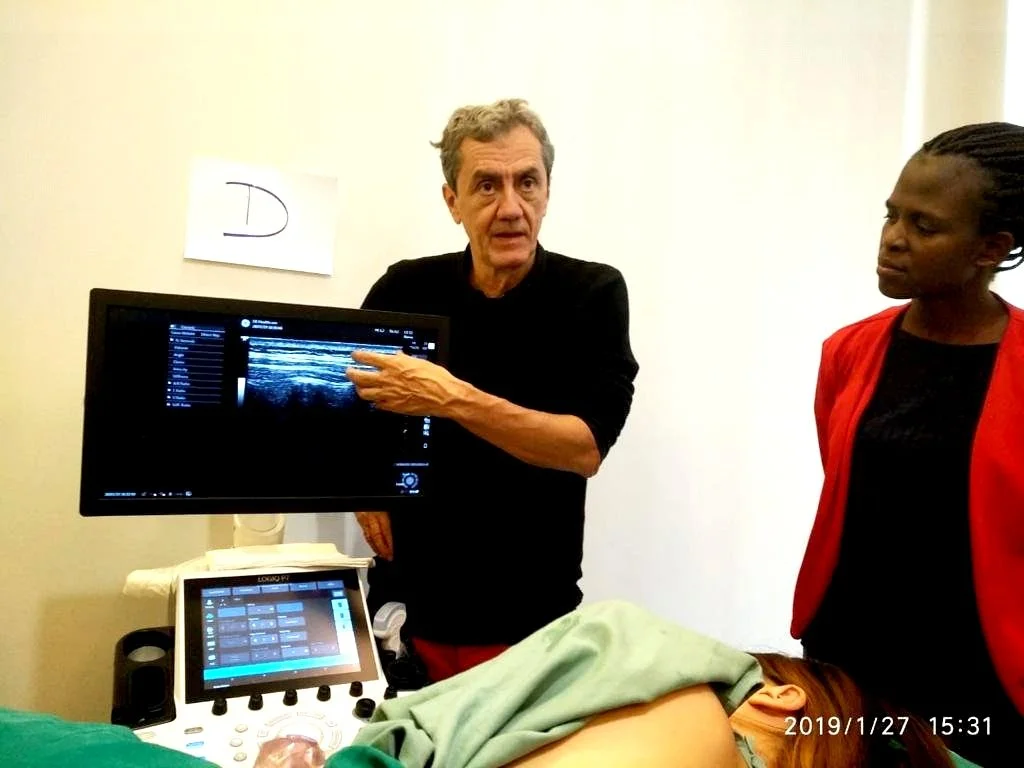
80+
EXPERT-LED LECTURES · 70+ HOURS
⎯⎯
Build advanced knowledge across the full scope of regional anaesthesia and analgesia, from foundational science to technique-specific clinical application.
✔ Led by international faculty. Designed for immediate clinical application.
-
The history and evolution of regional anaesthesia, PREMs and PROMs for RA, quality assurance and documentation, evidence-based safety protocols (ultrasound guidance, injection pressure monitoring, nerve stimulation), block failure management, sedation during block performance, opioid-sparing anaesthesia, local anaesthetic pharmacology and comparative pharmacology with additives, local anaesthetic systemic toxicity (LAST) diagnosis and management, and nerve injury assessment and stepwise management.
-
Enhanced recovery after surgery, postoperative regional analgesia management (efficacy and safety), transitional pain, regional anaesthesia for ICU patients, setting up an RA unit, RA in elderly and frail patients, RA and sepsis risk prevention, ambulatory regional analgesia, challenges of RA in obese patients, peripheral nerve blocks with pre-existing neuropathology, respiratory effects of RA, RA and its relationship to inflammation and cancer, and the role of stimulating catheters in perioperative pain management.
-
Cadaveric anatomy with clinical implications, sono-anatomy for peripheral nerve blocks from embryology to daily practice, upper limb neuro- and sono-anatomy with the new classification of upper limb blocks, lower limb neuro- and sono-anatomy, chest wall anatomy, abdominal wall and visceral innervation, perineum anatomy including pudendal and genitofemoral nerve anatomy, epidural space anatomy, neck anatomy, selective anatomical concepts for the erector spinae plane block, anatomical variability in RA, and applied anatomy for gynaecological and obstetric surgery.
-
Interscalene plexus block, supraclavicular blocks (indications, performance, and safety rules), infraclavicular brachial plexus blocks, axillary brachial plexus block, suprascapular and dorsal scapular nerve blocks, distal blocks at elbow and wrist, WALANT and wound infiltrations, PEC1/PEC2/serratus plane block, thoracic erector spinae plane block, intercostal and parasternal blocks (PIFB, TTPB), and paravertebral block. Includes dedicated sessions on anaesthesia and analgesia for upper limb, thoracic, cardiac, and breast surgeries.
-
Abdominal compartment blocks, advanced abdominal blocks, new abdominal blocks and anatomical considerations, ESP for major upper abdominal surgery, ultrasound imaging of the lumbar and thoracic spine, spine blocks under ultrasound guidance, new blocks for spine surgeries, unilateral and continuous spinal anaesthesia, and blocks for pelvic and anal surgeries.
-
Psoas compartment block, femoral nerve/femoral triangle/fascia iliaca blocks, obturator and lateral femoral cutaneous nerve blocks, adductor canal block, proximal sciatic approaches, distal sciatic approaches (popliteal, ankle, and plantar compartment blocks), ESP at L3 for hip surgery, and PENG/iPACK blocks. Includes dedicated sessions on anaesthesia and analgesia for hip, knee, foot, and limb amputation surgery.
-
Neuroanatomy for facial blocks, RA for facial surgeries, RA for airway management and vocal cord surgery, ultrasound-guided blocks for ophthalmic surgery, labour analgesia, anaesthesia and analgesia for caesarean section, epidural test dose considerations, pudendal nerve block for episiotomy, post-dural puncture headache management, neuraxial blocks in children, paediatric LA pharmacokinetics, and peripheral nerve blocks in children.
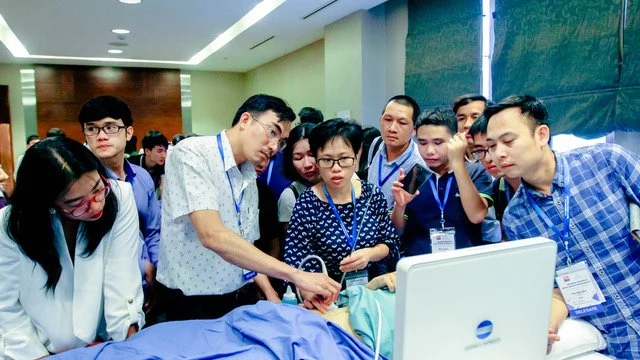
40+
HANDS-ON WORKSHOPS · 40+ HOURS
⎯⎯
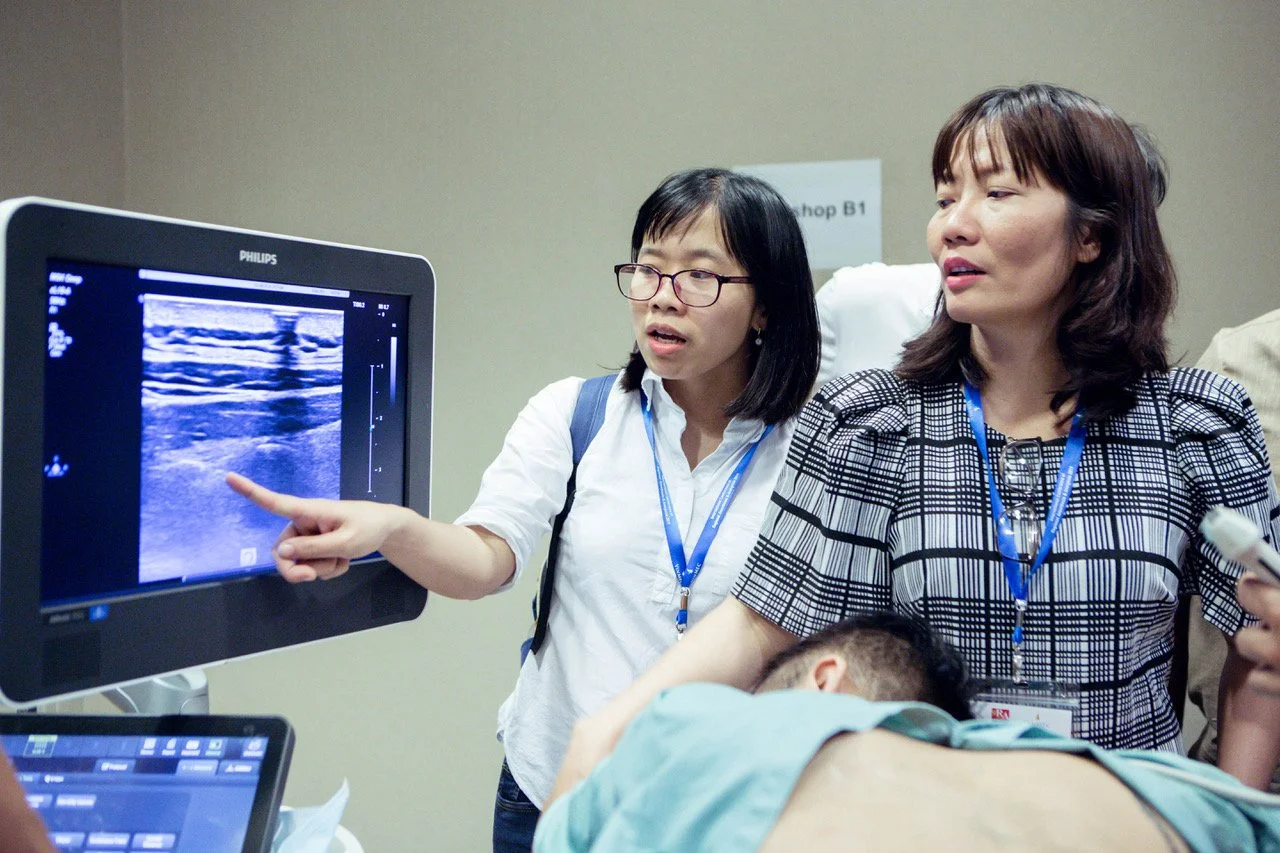
Develop procedural confidence through supervised practice on live volunteer models under real-time ultrasound guidance. Workshop sessions cover the full range of peripheral nerve blocks across upper limb, lower limb, truncal, neuraxial, and head and face regions, with dedicated technique sessions for each anatomical area.
All workshops are conducted in small groups of 10 with direct faculty supervision.
✔ Real-time ultrasound guidance on live volunteer models.
20 hrs
CLINICAL CASES + 5-DAY OBSERVERSHIP
⎯⎯
Strengthen your clinical reasoning through structured case discussions covering complex perioperative scenarios, block selection and failure management, complication assessment, and medicolegal considerations. The programme includes an interactive court simulation session with an expert witness scenario examining RA-related claims.
Consolidate your skills with a 5-day clinical observership at VinMec International Hospital in Hanoi, or at another accredited centre of regional anaesthesia and analgesia.
✔ Real-world clinical experience in regional anaesthesia and perioperative analgesia.
Three in-person sessions at VinMec Times City International Hospital, Hanoi, Vietnam, followed by a final examination and graduation ceremony.
Programme structure
Eligibility


This diploma is open to qualified medical professionals in the following categories:
M.D. degree holders
Holders of an M.D. degree or equivalent qualification from a recognised medical institution. This includes anaesthesiologists, pain specialists, critical care physicians, perioperative medicine doctors, surgeons, trauma specialists, sports medicine doctors, and emergency medicine physicians involved in regional anaesthesia practice.
Medical residents
Current residents in anaesthesia, critical care, pain medicine, surgery, emergency medicine, or related fields.
→ Diploma delivered in English. Full attendance is required for all sessions and workshops.
→ International applicants welcome. Participants from 29 countries across Asia, the Middle East, Australasia, Africa, and Europe have graduated from MEDINFUSION programmes to date. The programme is particularly accessible for clinicians based in Vietnam, Indonesia, Malaysia, the Philippines, India, the UAE, Saudi Arabia, Qatar, South Korea, Australia, New Zealand, and China.
What our graduates say
The sharing of experience and the showcase from practical sessions helped to improve precision and confidence in the practice of regional anaesthesia.

Taught us a lot of clinical pearls, the professors are good lecturers and clinicians, and entertained all our questions.
Lectures are being taught by the pillars of RA. Getting tips and advises directly from them.

Helpful in meeting both experts and novice who are interested in continuous learning. Discussions hone ones critical thinking.

Applications for the 2027 intake are now open
Register your interest
2027 intake now open
Complete the form below to receive full programme details, including fees, payment options, and enrolment guidance.
Our team will respond to your enquiry directly.
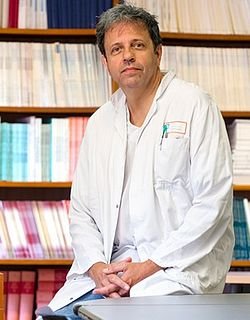
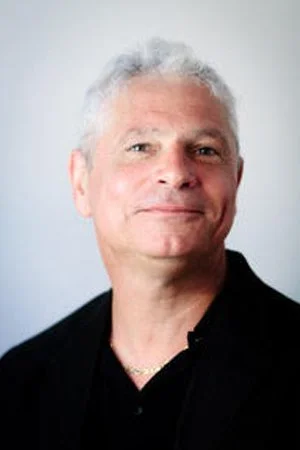
International faculty:
20+ senior clinicians and academics

.
Explore other diplomas
Interventional Pain Medicine Diploma
Develop advanced interventional skills across the full spectrum of pain medicine through 100+ lectures and 50+ hands-on workshops. A 1-year programme from the University of Montpellier.
.
Master Course Diploma of Regional Anaesthesia & Interventional Pain Medicine
Coming soon
Complete both the Pain Medicine and Regional Anaesthesia diplomas in a structured 2-year pathway. Receive three official credentials from the University of Montpellier.